The abstract of driving record
Moving violations found committed are reported to the Department of Licensing and appear on the driver's abstract. That abstract is what insurers order at renewal.
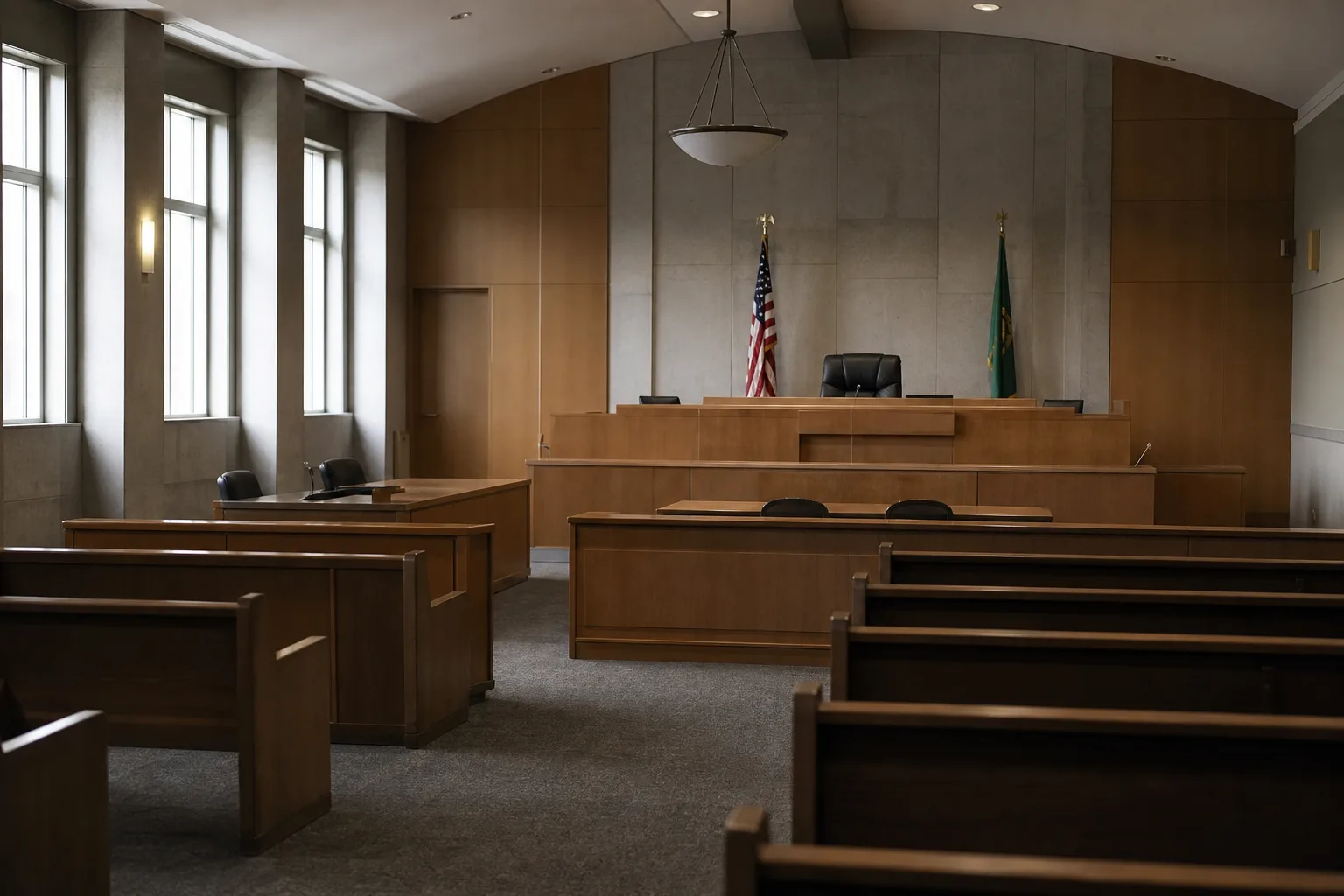
A Washington notice of infraction asks one question with three answers, and each one does something different to the fine, the driving record and the insurance file.
Washington requires a response to a notice of infraction within fifteen days of the date printed on it. Missing that window produces an automatic finding rather than a delay.
Sending the money is legally a concession that the infraction was committed. The court treats it the same as losing a contested hearing.
At a contested hearing the state must prove the infraction is more likely than not, the civil standard. It does not have to prove anything beyond a reasonable doubt.
Moving violations found committed are reported to the Department of Licensing and appear on the driver's abstract. That abstract is what insurers order at renewal.
A mitigation hearing can lower the amount owed or spread the payments out. It cannot remove the finding or keep it off the record.
Many contested cases resolve when the violation is amended to a non-moving offense. The driver still pays something, but nothing reaches the driving abstract.
One speeding ticket turned into a long read through Washington's court rules, prosecutor policies and a stack of lawyer fee agreements. What that turned up is written out here for whoever gets the next one.
A Washington notice of infraction is a short document that asks a narrow question, and most of the confusion around it comes from readers looking for information the form was never designed to carry. It states the alleged violation, the statute or municipal code section, the monetary penalty, the issuing officer and the court with jurisdiction. Then it asks what you intend to do. There are three answers available, they lead to three different procedures, and the difference between them is not mainly about money. It is about what ends up on your driving record and, downstream from that, in front of an insurer.
The first option is to pay the penalty. Paying is an admission that the infraction was committed, the case closes, and the court forwards the finding to the Department of Licensing if the violation is a moving one. The second is to request a mitigation hearing, which concedes the violation happened and asks the court to consider the circumstances when setting the amount owed. The third is to contest, which puts the burden on the state to prove the infraction by a preponderance of the evidence, the civil standard rather than the criminal one. Only the third option can end with nothing on the record.
The penalty printed on the notice is the smallest number in the transaction for most drivers. A committed finding on a moving violation is reported to the Department of Licensing, where it joins the abstract of driving record, and insurers who pull that abstract at renewal price accordingly. The size of the increase depends on the carrier, the policy, the driver's age and what else is already on the record, so no honest estimate exists in the abstract. What is predictable is the shape: a surcharge that persists across several renewal cycles, quietly, without a letter announcing it. Compared against that, the fine is often the cheaper half.
Commercial drivers sit in a stricter system. The Federal Motor Carrier Safety Administration oversees the standards that govern commercial licenses, and violations committed in a commercial vehicle, or by a CDL holder in some circumstances, are treated differently from the same conduct by an ordinary driver. The tools available to reduce the consequences of an ordinary ticket are narrower or unavailable. Anyone whose living depends on a CDL should assume the calculation is not the one described here and get specific advice before checking any box.
A mitigation hearing is short, informal and usually held without the officer present, because nothing is in dispute. You explain the circumstances, the judge or magistrate listens, and the court may lower the penalty, allow a payment plan, or leave the amount alone. What the court cannot do at mitigation is undo the admission. The infraction is still committed, still reported, still visible to an insurer. Mitigation is the right choice for someone who wants the matter over, accepts the finding, and needs the payment to be manageable. It is the wrong choice for someone whose real concern is the abstract.
There is one adjacent tool worth knowing about, and it is requested rather than granted automatically. Washington courts may defer a finding on a moving violation, holding the case open for a period and dismissing it if no further violations occur, and a driver is generally eligible for one such deferral every seven years. Deferrals are discretionary, court practice varies, and a deferral used on a minor ticket is not available later for a worse one. That scarcity is the whole reason to think before spending it.
A contested hearing is an evidentiary proceeding. The state relies on the officer's sworn report, the officer may or may not be subpoenaed to appear, and the driver may challenge the report, the calibration or certification records behind a speed measurement, the timeliness of the filing, or the sufficiency of the notice itself. Many contested hearings resolve before testimony, through an agreement to amend the violation to a non-moving offense that does not reach the abstract, or through dismissal on a procedural defect. These outcomes turn on documents and local practice rather than on the driver's account of the drive.
That is the reason drivers hire counsel for a proceeding whose maximum financial exposure is a few hundred dollars: a Seattle Traffic Attorney is being paid to keep a moving violation off the record and out of the insurance file, not to argue about the fine. The fee is typically flat, quoted before the work starts, and often comparable to a single year of surcharge. Whether it is worth paying depends on how many findings are already on the abstract, whether a job requires clean driving, and how much the carrier weights the specific violation.
Hearing dates get rescheduled, payment plans get negotiated, and continuances are routine. The response deadline is different. Washington gives fifteen days from the date of the notice to respond in one of the three ways, and letting that window close does not make the ticket go away. The court enters a finding that the infraction was committed, adds a penalty for failure to respond, and the case can move to collections and to a license suspension referral. That path costs more than any of the three boxes and forecloses the one outcome, dismissal, that was still available on day fourteen.
Read the date on the notice first, then decide. The choice between paying, mitigating and contesting is a choice about the record, and the record is what carries the cost forward.